


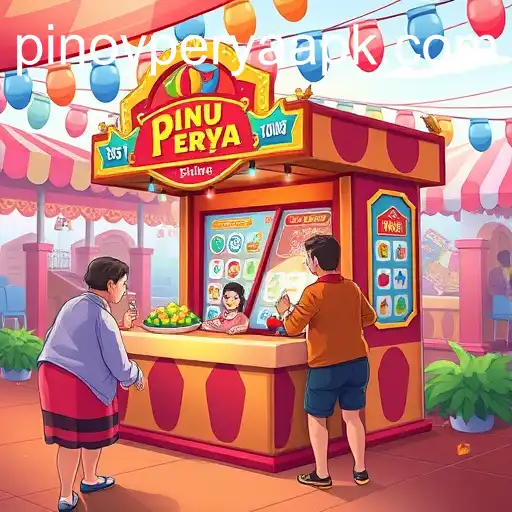
In recent years, the mobile gaming industry has witnessed a significant rise in the popularity of localized games that cater to specific cultural and regional interests. Among these, "Pinoy Perya" has emerged as a noteworthy contender, capturing the attention of gamers with its vibrant reflection of the traditional Filipino carnival experience.
Pinoy Perya, available as an APK for Android devices, brings the nostalgic and colorful world of the Filipino perya (carnival) to life, attracting both young and old gamers with its engaging mechanics and culturally rich content. As we delve into 2025, this game continues to climb the popularity charts, particularly among overseas Filipinos looking to reconnect with their roots.
The timing of this game's release is interesting against the backdrop of the ongoing globalization of digital content. With an expansive mobile market, particularly in Asia, Pinoy Perya extends beyond just serving as a reminder of home; it also showcases the increasing demand for culturally resonant games in a world that often feels homogenized by global gaming trends.
Analysts suggest that this trend points towards a broader paradigm shift within the gaming industry, where there is a growing appetite for experiences that reflect personal and cultural significance. This shift is supported by technological advancements and the ease of accessing niche content through platforms that distribute APK files, similar to what we've seen with other trending games in this decade.
Beyond entertainment, the rise of games like Pinoy Perya can have educational impacts, giving non-Filipino players insights into the cultural nuances of the Philippines. This highlights the potential of video games not only as a recreational activity but also as a cultural bridge in increasingly diverse digital landscapes.
As the global gaming market continues to evolve, Pinoy Perya exemplifies how mobile platforms are democratizing access to culturally unique content. This game is more than just a nostalgic nod to Filipino traditions; it is part of a larger movement that acknowledges the importance of preserving cultural heritage in modern interactive forms.